
Vaginal dryness
If you recognize any of these symptoms, you may be suffering from vaginal atrophy

Pain and discomfort during and after sex

Irritation during and after sex

Itching during and after sex

Bleeding after sex
What is vaginal atrophy?
A Vaginal atrophy is a “silent epidemic” that affects up to 60% of postmenopausal women and its symptoms significantly reduce quality of life and sexual health.
Postmenopausal women experience a set of signs and symptoms directly related to the decrease in levels of sex hormones, especially oestrogen, involving the genital tract or lower urinary tract, together known as menopausal genitourinary syndrome. More than half of postmenopausal women report symptoms related to genitourinary syndrome, which has a significant impact on a woman’s quality of life. Unlike vasomotor symptoms, which tend to diminish over time, vaginal atrophy does not diminish spontaneously and even progresses when hormone levels are very low.
Of menopausal women in Portugal
A woman’s life will be spent in menopause
What causes vaginal dryness?
Vaginal atrophy, the most obvious symptom of which is vaginal dryness, also known as atrophic vaginitis or vulvovaginal atrophy, is an extremely common and uncomfortable problem for many postmenopausal women.
During the menopause, estrogen levels begin to decrease, which influences different tissues in the body. For example, some women notice that their
Vaginal tissue before the menopause:
Estrogen keeps vaginal walls thick and elastic
Vaginal tissue after the menopause:
The drop in estrogen makes the tissue thin, dry and less elastic
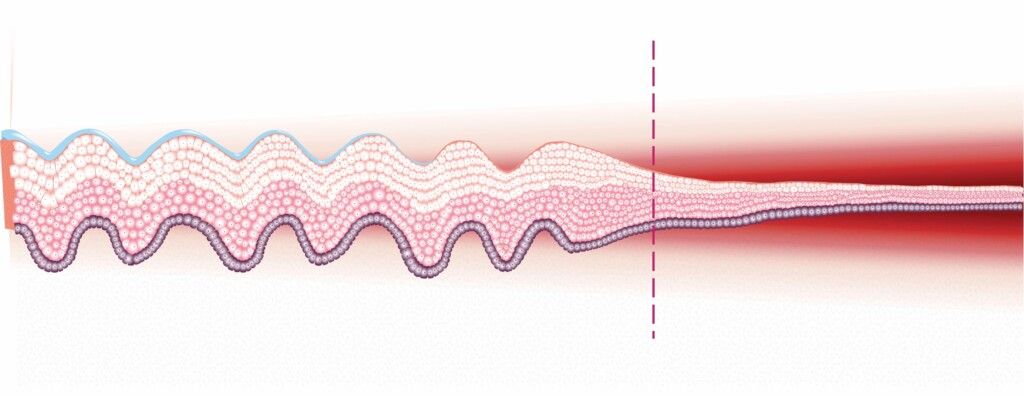
However, the menopause is not the only cause of vaginal atrophy; any procedure that lowers oestrogen levels, such as removal of the ovaries, anti-oestrogen drugs, chemotherapy and breastfeeding, can cause vaginal atrophy.
 It’s important to know that vaginal dryness due to the menopause is a chronic condition. This means that, without treatment, it won’t go away on its own and its symptoms may even get worse.
Symptoms
These changes give rise to uncomfortable symptoms such as dryness (the most frequent symptom), itching, irritation or urinary symptoms causing daily discomfort and pain during sexual intercourse.
Vaginal atrophy can affect not only a woman’s sex life, but also her relationships and self-esteem.
Most common symptoms of Vaginal Atrophy

Pain during sexual intercourse (dyspareunia)

Vaginal dryness
Vaginal bleeding

Itching

Decreased libido (sexual desire)
Can Vaginal Atrophy affect my relationship?
Vaginal atrophy doesn’t just affect sex life, it also affects relationships with partners, a woman’s self-esteem and her emotional well-being.
Studies show that 62% of women with vaginal atrophy avoid intimacy, 58% have less sex, 35% postpone sex and 23% exclude sex from their lives. Concern about the future of their sex life, loss of self-confidence as a sexual partner and the feeling that their body “doesn’t work the way it used to” are common among women suffering from vaginal atrophy.
Communication with your partner is a key element in addressing these problems.

7/10 women avoid intimacy due to the symptoms of vaginal atrophy.

2/3 of women say that vaginal atrophy affects their love relationships.

2/3 of women with vaginal atrophy don’t know that their symptoms can be treated.

Treatments
Women live through the menopause for more than a third of their lives and can suffer from vaginal atrophy during this long period. Vaginal atrophy is underdiagnosed and inadequately treated, which is why it is necessary to know about options other than hormonal ones to improve women’s quality of life.
Vaginal treatment with estrogens
Application of oestrogen-containing drugs inside the vagina, where they exert their action. There are a number of locally applied oestrogen-containing drugs, with varying intervals of application and different pharmaceutical forms, such as creams, ova, gels, tablets or capsules.
However, some women find vaginal administration inconvenient, as it is uncomfortable, complex and interferes with sexual spontaneity through the discharge of the drug during intercourse, as well as the need to delay intercourse until at least 1 hour after application to avoid any possibility of oestrogen transmission.
As with any hormone treatment, vaginal treatment with oestrogens can be associated with certain risks and side effects, such as the risk of breast cancer, particularly when hormone use is prolonged.
These medicines are subject to a doctor’s prescription and should be used according to the doctor’s instructions.
Selective estrogen receptor modulators (SERMs)
Due to concerns about the potential stimulatory effects of oestrogens on the breast and endometrium when used for a long time, SERMs have been developed with the aim of showing positive effects on target tissues.
A SERM (Selective Estrogen Receptor Modulator) has been approved by the health authorities for the treatment of moderate to severe symptoms of vaginal atrophy (vaginal dryness, pain during sexual intercourse). It is the first oral non-hormonal drug approved for the treatment of vaginal atrophy.
This treatment option is a non-hormonal tablet that acts directly on the tissues of the vagina and vulva. In the vagina, it restores the thickness and moisture of the vaginal mucosa and increases natural lubrication, thus improving all aspects of female sexual function (desires, arousal, lubrication, orgasm, satisfaction, reduction of pain during intercourse). In the vulva, it is responsible for normalizing the sensitivity of vestibular nerve fibres and in the process of restoring vulvar, vaginal and urethral tissues and, above all, the labia minora.
Lubricants
Vaginal lubricants are generally used to improve lubrication during sexual intercourse. They are applied directly to the vagina and provide an immediate effect of symptom relief. However, they do not solve the underlying cause of vaginal atrophy.
Moisturizers
Vaginal moisturizers are applied regularly to the vagina and help restore normal vaginal moisture and pH, thus reducing irritation and discomfort.
They are a good treatment option for keeping the vagina hydrated, as they rehydrate the vaginal tissues, adhering to the surface of the vaginal epithelium like natural secretions.
Unlike lubricants, vaginal moisturizers provide long-term relief.
ClimaCare Gel is a high-concentration hyaluronic acid vaginal moisturizer specifically for vaginal dryness, itching, burning, discomfort, pain during intercourse, lubrication and other vaginal complaints.
ClimaCare Vaginal Gel protects women from vaginal infections (bacterial vaginosis or fungal infection), restores vaginal pH and microflora. Want to know more about ClimaCare Vaginal Gel? Go here.